Pages

Nikki Glaser Apologizes for Body Shaming Taylor Swift in Netflix Doc - E! NEWS

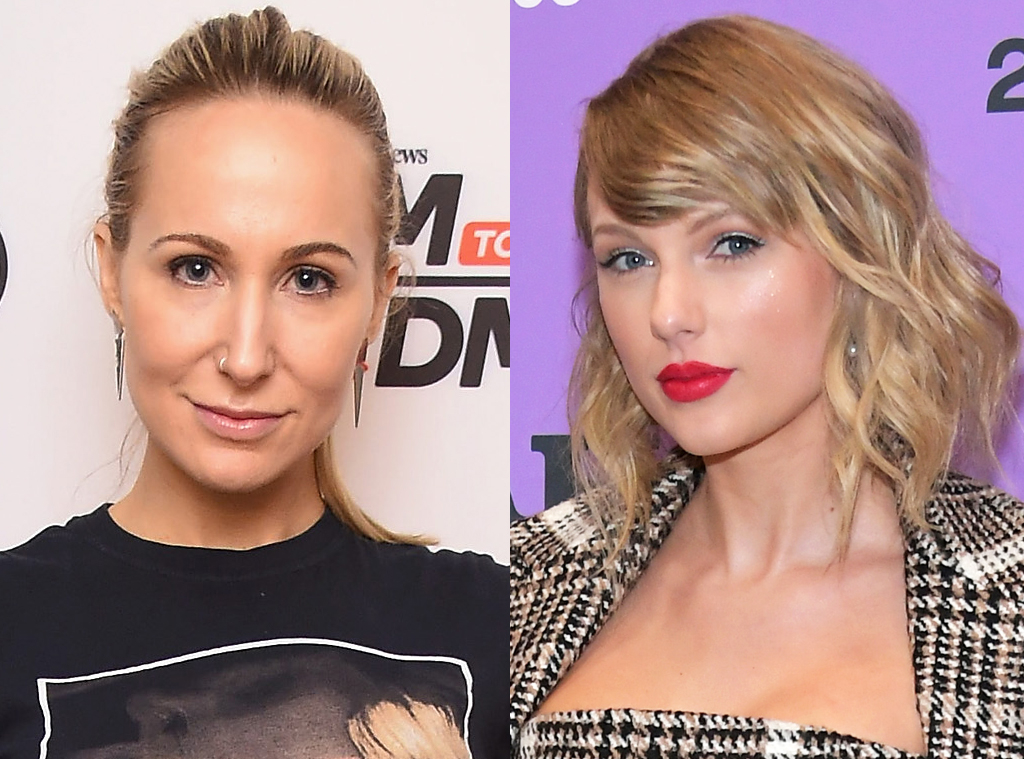
Nikki Glaser, Taylor Swift

Gary Gershoff/Getty Images, Neilson Barnard/Getty Images

Nikki Glaser has issued an apology to Taylor Swift.

The comedian took to social media on Friday to share her regret over comments that are featured in the superstar singer's new Netflix documentary, Taylor Swift: Miss Americana. In the doc, which just premiered on the streaming service, Glaser can be heard making statements about Swift's appearance, as well as her group of friends. The documentary, directed by Lana Wilson, references Swift's past eating disorder struggles.

Following the debut of Miss Americana, Glaser posted an apology to Swift on her Instagram.

"I love @taylorswift. Unfortunately, I am featured in her new documentary as part of a montage of asshats saying mean things about her, which is used to explain why she felt the need to escape from the spotlight for a year," Glaser began her message. "It's insanely ironic because anyone who knows me knows I'm obnoxiously obsessed with her and her music."

Glaser went on to say that she first heard herself in the trailer for Miss Americana last week and was "horrified."

"The sound bite was from an interview I did 5 years ago and I say in SUCH a s--tty tone, 'she's too skinny; it bothers me... all of her model friends, and it's just like, cmon!'" Glaser told her followers. "This quote should be used as an example of 'projection' in PSYCH101 textbooks. If you're familiar with my 'work' at all, you know I talk openly about battling some kind of eating disorder for the past 17 years. I was probably 'feeling fat' that day and was jealous."

Glaser noted that she's also had people say the "same s--t" about her being "too skinny" before and that she knows how "terrible" it feels.

She added, "And I was only bothered by her model friends because I'd like to be her friend and I'm not a model."

"I really have no need to post this other than to apologize to someone who seriously means SO much to me," Glaser wrote. "I only got a couple death threats from die-hard Swift fans, which as one myself, I totally get."

Glaser said that she hopes this apology gets to Swift so that the "ME!" singer knows how sorry she is for "any pain" that she caused. It's also mentioned that Swift's music has greatly influenced Glaser's life and that she'd love to be friends with the Grammy winner.

"In fact, her song 'The Man' is the inspiration for my new hour of material and I feature the song is multiple iterations during my current tour," Glaser concluded her post, adding that she can't wait to watch about 99.97% of Swift's documentary. Along with her comments, Glaser shared a photo wearing Swift's Red era merchandise.

It doesn't appear that Swift has responded to Glaser's post just yet.

Miss Americana is streaming now on Netflix and can also be seen in select theaters.

Let's block ads! (Why?)


Entertainment - Latest - Google News
February 01, 2020 at 05:14AM
https://ift.tt/37LZ2PN

Nikki Glaser Apologizes for Body Shaming Taylor Swift in Netflix Doc - E! NEWS
Entertainment - Latest - Google News
https://ift.tt/2RiDqlG
Shoes Man Tutorial
Pos News Update
Meme Update
Korean Entertainment News
Japan News Update

John Cooper’s Sundance Swan Song: Revealing the Movies He Rejected and His Biggest Regrets - IndieWire

John Cooper wasn’t so sure about “Honeyland.” A year before the documentary about a Macedonian beekeeper would score two Oscar nominations, the future Sundance World Cinema Documentary selection didn’t resonate with the festival director as he entered his final year.

“I just didn’t get that film when I watched it,” said Cooper from his Sundance office during the 2020 edition of the festival, as he ended his 11-year run overseeing the event. “And I didn’t have to get it, because everyone else in the room loved it. It’s hard to find 125 films that you love, that you totally respect. I don’t pick all these films. I play the room.”

Cooper’s candid admissions about the flaws of the programming process speak to the unpredictable nature of running a festival, and how much of its impact begins with frantic behind-the-scenes debate. Each year’s program invites a fair share of drama — what will play well, sell big, or drop with a thud — and that uncertainty injects the experience with a dramatic narrative of its own.

As he wrapped up his tenure overseeing the festival following three decades of programming, Cooper mused on how each year’s program emerged. “It can get very fickle and very subjective,” he said. “I’m happy to be that way. It’s my job to filter the people in the room. Sometimes there are programmers in the room that love a film and we don’t show it. And then they love to send me the positive reviews later from other festivals.”

In the Sundance 2020 day-one press kit, director of programming Kim Yutani alluded to the tenuous process of selecting a program, which this year culled from a record 15,000 submissions. “We enjoyed the discussion of the merits of each film and how it would fit into the context of the festival as a whole,” she said. “We respond to works individually and that leads to passionate conversations.”

Short Term 12

“Short Term 12”

Cinedigm

There are many examples of Sundance rejects from Cooper’s tenure that went on to acclaim elsewhere. In 2013, Destin Daniel Cretton’s residential treatment facility drama “Short Term 12” was the toast of the SXSW Film Festival, where it won the grand jury prize. “The conversation was, ‘Why wasn’t that at Sundance? They really screwed up,’” Cooper said. “What’s frustrating is that we’re judging rough cuts. I remember watching that rough cut and just being like, ‘Is this going to happen?’” However, the Sundance reject that still hits him hardest is “George Washington,” David Gordon Green’s expressionistic 2000 debut that premiered in Berlin. “When I finally saw it, it was a totally different film than what we saw, but we still got pegged for not showing it.”

He was miffed by the assumption that Sundance’s recurring documentary filmmakers spoke to a clubby mentality in the programming process. “Talk to the people we’ve rejected from the doc world over the years,” he said. “We’ve rejected Liz Garbus. We’ve rejected Rory Kennedy. We’ve rejected Morgan Spurlock. They always go, ‘Yeah, I knew that wasn’t going to be at Sundance.’ Because Sundance has that level of integrity of quality, freshness and originality. And we really want to keep new voices coming in.”

Then there are the movies that Cooper did select, only to face a flurry of backlash. In 2007, while serving as director of programming, Cooper contended with the notorious response to “Hounddog,” the southern-friend Dakota Fanning movie in which her underage character is raped on camera. “See, I liked that movie,” Cooper said. “I’m always caught off guard by any provincial thought or conservative point of view, because I don’t see it like that. This is Sundance. We can do anything. What was the big uproar? Underage sex. To me, that was the interesting thing about it, because I’m a person who believes that if it happens in the world for real, there’s a place for it in a certain type of film.”

Editorial use only. No book cover usage.Mandatory Credit: Photo by Full Moon/Kobal/Shutterstock (5878226i) Dakota Fanning Hounddog - 2007 Director: Deborah Kampmeier Full Moon Films USA Scene Still

“Hounddog”

Full Moon/Kobal/Shutterstock

Sundance’s focus on diversity has made headlines lately — 53% of filmmakers in the U.S. Dramatic Competition are people of color, and 40% are women — though Cooper emphasized that its focus on representation goes beyond that. “I think what you really have to look at is the true diversity of your programming staff,” he said. “It’s not just gender and race, or sexual preference. It’s also how we argue about the types of films that we’re showing. I mean, I’m the one who shows most of what you would think is a conventional female movie. I respond to them. And there’s other people that don’t.” While he claimed his program team didn’t select films with diversity in mind, the process included some doubling back. “In the end, we will look at it and say, ‘Did we miss anything?'” he said. “And everybody has their notes, and we go back and sometimes we’ll re-watch things. It’s part of that process of what we do.”

After years of debate about Sundance’s ballooning market, Cooper still resisted the idea that any programming decisions involved a movie’s sales prospects, and bemoaned the impact of big sales on the optics of the festival. “It was changing perceptions of who we were,” he said. “That we were getting too commercial, or we were fading, our important was going away. People said there wasn’t as much discovery, or that the discovery we were making was people who were already there, or that we were losing our edge. That just freaked me out. We’re also rejecting a lot of big people. You can’t let outside influences in. You have to trust your instincts.”

Still, he embraced the opportunity to guide hungry buyers through the lineup. The same year that “Hounddog” premiered, Cooper programmed the lo-fi romantic musical “Once,” which Fox Searchlight eventually picked up to great success. But that only happened late in the festival after word-of-mouth had time to build. “I told every buyer to see ‘Once,’ and when I went to that first screening, there was nobody there,” Cooper said. “They thought I was just bullshitting, because they don’t really trust me.”

Cooper acknowledged the value of industry presence at Sundance without embracing it himself. “I don’t think Sundance needs it,” he said, “but I think the filmmakers do. I like when filmmakers make their money back. I like when they look like they’ve been a success here.”

He singled out companies like A24 and Neon “that just keep coming to take odd films and make them successes,” and looked back on the ’90s era of the festival, a pre-streaming climate filled with a very different set of independent distributors. “When I started, they were all like that,” Cooper said. “Bingham Ray at October Films. Gramercy, Miramax, New Line, Fine Line. There were all these eccentric people working at these companies, and this is what they were trying to do. And what happened with all of those, if you looked at their trajectory, is they all got bought by big studios. This one went here, this one went there, this one went there, and they all got closed down. Boom, boom, boom.”

Cooper shrugged off reports about declining box office figures for movies that launched at the festival. “I almost laugh now when they start talking about the theatrical numbers for independent films,” he said. “It’s ridiculous. They were never big. It’s harder and harder to get people into cinemas, because they’re going to see an ‘Avengers’ movie. I do, too. They’re not going to see a small movie that might be upsetting to them.”

As a result, he saw potential in the rise of the streamers. “On platforms, I know these films get watched, because when I talk to our donor population, a lot of them see eccentric stuff they didn’t used to see because it used to come a theater and then it would be gone,” he said. “That’s why documentaries are so hot right now, because people will watch documentaries constantly on Netflix, Amazon, Hulu. That’s where the numbers are. If we actually started counting those numbers, I’d think that independent film is killing more now than it ever did.”

palm springs andy samberg

Palm Springs

Chris Willard

Notably, Sundance’s 2020 market underscored that confidence. Its biggest sale in history took place with Neon and Hulu jointly acquired the Andy Samberg comedy “Palm Springs,” a playful “Groundhog Dog” riff that used the premise to explore the nature of monogamy. The companies announced the figure for the deal as $17.5 million — and tacked on an additional 69 cents in a cheeky effort to make it a record-setter, ahead of Fox Searchlight’s $17.5 million deal for “Birth of a Nation” in 2016. Cooper wasn’t so sure “Palm Springs” was an obvious hit. “Is that a commercial movie?” he asked. “It’s pretty quirky.”

The question required its director to weigh in. Speaking by phone a few days after the deal closed, “Palm Springs” director Max Barbakow mused on what it felt like to fill the obligatory Sundance breakout mold. “It feels silly and really odd,” he said. “Honestly, all I ever wanted to do was make movies and now there’s this opportunity to do it on a bigger canvas.” He recalled reading about all-night Sundance dealmaking in Peter Biskind’s “Down and Dirty Pictures,” and said, “It’s amazing to be a part of that.” But the theatrical component of his sale was key. “I think the collective experience of that story, seeing that together, really helps,” he said. “It might have more of an impact if you have to go find it before it’s available everywhere.”

Cooper expressed confidence in the potential for Sundance’s breakout potential to continue down the line. “The voices of people who want to get in have gotten louder, which only tells me that Sundance is more important to them,” he said. “When they’re not being loud and dying to get into this festival, that’s a little scary, too.”

Popular on IndieWire

Sign Up: Stay on top of the latest breaking film and TV news! Sign up for our Email Newsletters here.

Let's block ads! (Why?)


Entertainment - Latest - Google News
February 01, 2020 at 03:41AM
https://ift.tt/2uPogxW

John Cooper’s Sundance Swan Song: Revealing the Movies He Rejected and His Biggest Regrets - IndieWire
Entertainment - Latest - Google News
https://ift.tt/2RiDqlG
Shoes Man Tutorial
Pos News Update
Meme Update
Korean Entertainment News
Japan News Update
An Inside Look at the Security for the Super Bowl - Inside Edition

Let's block ads! (Why?)


Entertainment - Latest - Google News
January 30, 2020 at 09:01PM
https://ift.tt/2uQtHfV

An Inside Look at the Security for the Super Bowl - Inside Edition
Entertainment - Latest - Google News
https://ift.tt/2RiDqlG
Shoes Man Tutorial
Pos News Update
Meme Update
Korean Entertainment News
Japan News Update

Taylor Swift Finally Invites You Into Her Narrative on Miss Americana - Vulture

Miss Americana invites you in, but never all the way in. Photo: Courtesy of Netflix

You can’t control your reputation. You think you can by striving to do and be good, but people are hard to win over now, and with good reason. Hucksters are on a powerful tear. No one buys anyone else’s story anymore. Come up too quickly, and you get called a grifter or an “industry plant.” Advocate too hard, and you’re pawned off as a social-justice warrior out to rack up “woke” points. Play it too nice, and people look for cracks. Anyone who seems too perfect must be faking it. Mary Sue is powerful, but she adheres to an unrealistic standard.

From Speak Now to Reputation, incremental changes in the public perception of Taylor Swift dovetailed with a growing distaste for wholesomeness in celebrities. For Swift, the turn began with humor about her signature awards-show facial expression and graduated to taxonomies of the men she dated and snark about her figure. At the beginning of the last decade, Taylor was America’s sweetheart, a hometown heir to the pop-country estate Shania Twain built. Near the end of the decade, some saw the singer as a diva who deserved to be taken down a peg. A lurid sequence in Swift’s affecting, occasionally revealing new Netflix documentary Miss Americana lays out several consecutive years of increasingly ghoulish entertainment-show clips to try and trace her pathway from “Innocent” to “I Did Something Bad.” Much of it is jarringly tasteless. You come away understanding how pressure like that could convince a gifted, chipper songwriter to go heel.

“My entire moral code is a need to be thought of as good,” Swift says early on in Miss Americana, out tomorrow. Her entire career, she explains, has been a quest for public approval. It’s the impetus for her growth as a teen country sensation and for her metamorphosis into a pure pop titan. It’s the reason she stayed out of politics through most of the decade and the reason she stayed out of the public eye through most of 2017, when her long-running Kardashian-West feud finally blew up in her face. Swift, who once asked to be excluded from that narrative, is now telling her side of the story, and not all of it is pretty. Her lasting memory of the infamous interruption at the 2009 VMAs is not Kanye jumping on the stage to say Beyoncé deserved her award. It’s the sound of the audience booing, she thought, for her. She takes hard hits, and she hits back harder. She’s informed that Reputation wasn’t nominated in any major categories for the 2018 Grammys and, without missing a beat, says, “That’s fine; I need to make a better record.”

Miss Americana mixes home movies, diary readings, press clips, awards-show tape, and studio footage to tell the story of Taylor Swift’s peaks and valleys, from struggling as a preternaturally gifted teen musician imploring patrons at tiny performance spaces to request “Tim McGraw” on local radio to scaling the peak of the industry as one of the few acts to win an Album of the Year Grammy twice to falling from grace in the Reputation era and restoring balance with last year’s Lover. Like the artist herself, Americana is a little inviting and a little guarded. It lets you into intimate spaces like apartments and private jets and strategy meetings. You get to see the singer’s intimidating musical talents and media savvy in action, to watch her hatch crazy ideas that go over grandly. The hardest questions remain unanswered. They play the clip of the call where she gives Kanye her blessing to make “Famous,” the song she skewered him for onstage at the 2016 Grammys, as if she’d been blindsided by the release, but she never explains why she did it.

Miss Americana works best as a snapshot of Swift breaking out of the safe, strategically apolitical mold she was forged in, as a Nashville teen sensation, and as a studio diary for Lover. Her choice to back Tennessee Democrat Phil Bredesen in the 2018 midterms horrifies her team, who urge her, hilariously, to consider what Bob Hope or Bing Crosby would do in her position. They think they’re complimenting her in the comparison to two of the most successful entertainers in American history, but the idea that a 21st-century woman should pattern herself after the careers of men born in the 1900s helps explain why Swift seemed plastic and distant to her detractors. It’s possible to lose yourself trying to please everyone else. Swift opens up about shame spirals and unhealthy eating that resulted from hyperawareness of who hates her and maps the rocky journey to caring less about what people think, which, in retrospect, looks like less of an aesthetic choice and more like the scars of a torrent of psychic pain on her defenses. After all that, she’s not afraid to catch smoke from the sitting president. She’s not afraid to write a song urging fans to fight fascism. (Did you ever think you would live to hear Taylor Swift utter the word “fascism”?)

The through line of the film is that music is Taylor Swift’s refuge as much as her occupation. Watching lyrics and melodies jump out of her mouth is exhilarating. The chorus of Reputation’s “Getaway Car” comes down like an epiphany; Lover’s “The Man” unfolds like a vent session in song form. The studio recording and video shoot for “ME!” are illuminating. The stripped demo that Swift makes with producer Joel Little is plaintive and pleasant, a far cry from the drippy, cloying studio version. (The Lover fragments illustrate the finer points of pop singers being named as co-producers on their own albums, as Swift occasionally shouts out ideas for instrumental flourishes while she’s writing her own parts. They also suggest that the album is a little overproduced in spots, compared to stripped tunes like “The Archer,” “Soon You’ll Get Better,” and “Lover.”) Brendon Urie’s note-perfect spot is recorded while he’s sick; Swift appears to pull the fully formed concept for the video from thin air on the spot. On the set, her joke to a cameraman that people can’t tell what thoughts lurk behind her face show a public figure aware of herself, how she looks, and what people think when they look at her … and itching to break free of it.

Miss Americana peels away some of Taylor Swift’s complexities to reveal even more complexities. It’s an enjoyable document for fans looking to get a peek inside their favorite artist’s brain. There’s an air of distance to it, though; it invites you in, but never all the way in. There are aspects of Swift’s private life and family life that, understandably, don’t come up much. The end result is flattering. She never comes across as rude in it; there’s no moment of dark candor, like Gaga wishing aloud in Five Foot Two that Madonna would stop being coy and just come for her, or any of the more salacious moments of conflict in classic music documentaries like Wilco’s I Am Trying to Break Your Heart or Ondi Timoner’s Dig! Miss Americana is more like Beyoncé’s Life Is But a Dream, a beautiful museum exhibit for an artist that, when it really picks up, manages to captivate you just enough to make you forget about the stanchions between you.

Let's block ads! (Why?)


Entertainment - Latest - Google News
January 31, 2020 at 04:01AM
https://ift.tt/38QuLPM

Taylor Swift Finally Invites You Into Her Narrative on Miss Americana - Vulture
Entertainment - Latest - Google News
https://ift.tt/2RiDqlG
Shoes Man Tutorial
Pos News Update
Meme Update
Korean Entertainment News
Japan News Update